
Fibers
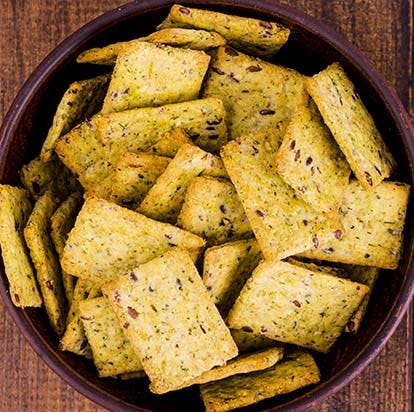
Consumer demand for fiber continues steady rise
At a Glance
Ingredion’s fiber solutions help formulators:
- Meet growing consumer demand for high-fiber, better-for-you foods and beverages across all categories
- Choose from soluble and insoluble fibers that deliver digestive and metabolic health benefits and functional performance in formulation
- Support multiple health benefits, including:
- Improved gut health and good gut microbiota
- Reduced after-meal blood glucose or insulin levels
- Increased satiety or after-meal calorie intake
- Bone health and mineral absorption
- Formulate with confidence using fibers that are FDA-recognized, low-FODMAP, plant-based and clean label friendly
- Enhance product appeal by improving texture, mouthfeel and sugar reduction potential through functional fibers
Access expert support for claim substantiation, labeling requirements and faster time-to-market for fiber-enhanced products.
Fiber ingredients for better nutrition and functional performance
Fiber plays a vital role in supporting overall health and wellness, and today’s consumers are actively seeking more fiber in their foods — from breakfast cereals and snacks to side dishes and even beverages. Top categories include bakery and cereals, as both incorporate fiber from grains as well as ingredient sources, however, growth is strongest in subcategories not typically associated with fiber, such as carbonated beverages, deli substitutes, chocolate and instant noodles.1 The takeaway for food and beverage brands is that there is no shortage of opportunities to grow their businesses by creating products with increased fiber that taste great and contribute to the benefits consumers demand.

Webinar: Innovative Ingredients: Empowering Metabolic Health
Food and beverage companies must stay ahead of shifting consumer priorities with formulations that support healthy weight management, optimal blood glucose levels and much more. Join us for our free webinar and hear Ingredion experts discuss:
- The latest health and wellness trends
- Evolving consumer behaviors and industry growth strategies
- Practical examples of product reformulation to meet consumer lifestyle goals
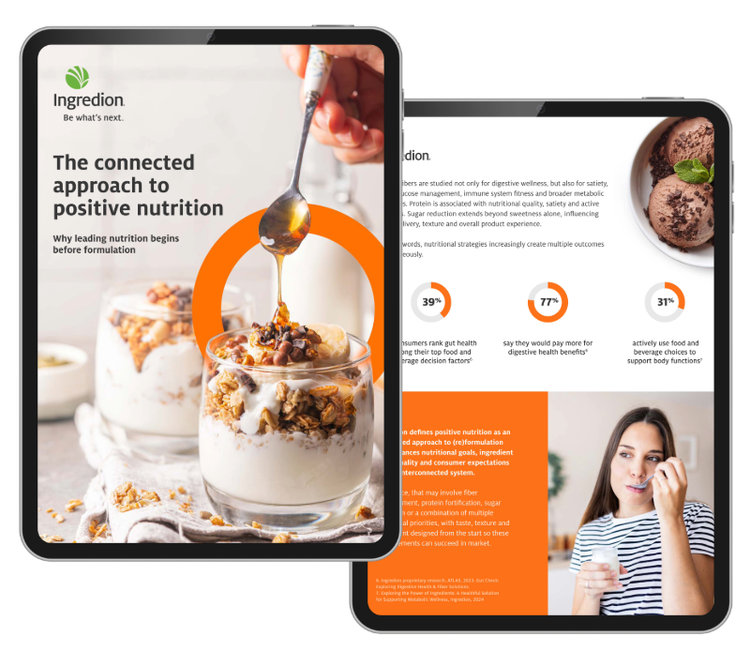
E-book: Design for all the nutritional goals. All at once.
Consumers don't experience nutrition claims one at a time. They experience the whole product.
Discover how designing nutrition — before formulation begins — can help deliver every benefit that matters to consumers, bringing health, taste, texture and trust together.
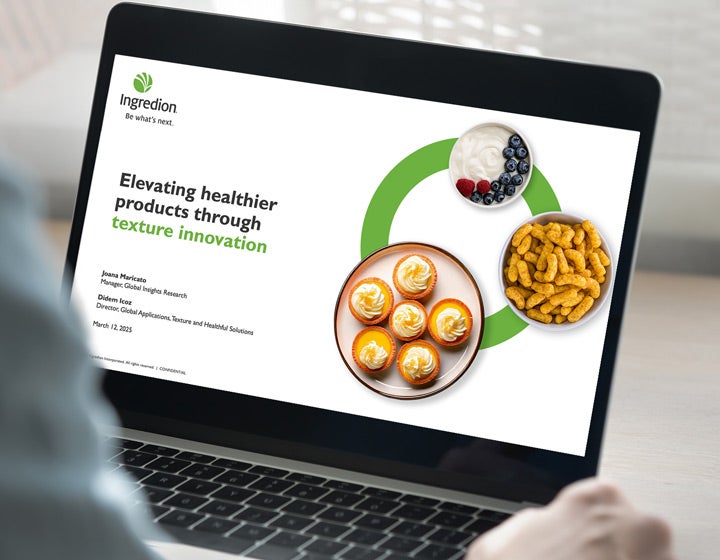
Webinar: Elevating healthier products through texture innovation
Join Ingredion as our experts discuss consumer insights related to texture and its role in the development of healthier food and beverage options. We'll also explore practical examples of how our technical and sensory expertise can help you formulate products with texture characteristics that provide a superior eating experience for consumers.
Regular fiber consumption can contribute to a wide variety of health benefits consumers seek
Ingredion’s fiber ingredients help address both nutritional goals and technical challenges in formulation. Dependent on the type and amount consumed on a regular basis, dietary fiber not only aids digestion, but can also offer a variety of other benefits*, including:
- Improved bowel function (laxation)
- Lower LDL/cholesterol
- Reduced post-meal blood glucose or insulin response
- Bone health and calcium absorption
- Lower calorie intake due to increased satiety
* FDA recognized
Understanding dietary fiber types
What is dietary fiber?
Dietary fiber consists of carbohydrate polymers with three or more monomeric units that are not digested or absorbed in the small intestine. Some noncarbohydrate components, such as lignin, may also be classified as fiber depending on regulatory definitions.
Soluble fibers
Soluble fiber dissolves in water. Soluble, viscous fiber will form a gel-like substance, which can slow digestion and help lower blood cholesterol and glucose levels. Soluble, non-viscous fiber, such as scFOS and inulin-type oligosaccharides, are capable of improving mineral absorption and improve bone health. Viscous soluble fiber naturally comes from oats and barley, psyllium husk, pectin‑rich fruits like apples and citrus, vegetables like eggplant and okra and guar beans. Soluble non‑viscous fibers naturally occur in chicory root, Jerusalem artichokes and other fructan‑rich plants.
Examples of potential benefits include:
- Support for digestive or gut health
- Contribution to mineral absorption
- Assistance with post-meal glycemic response management
Insoluble fibers
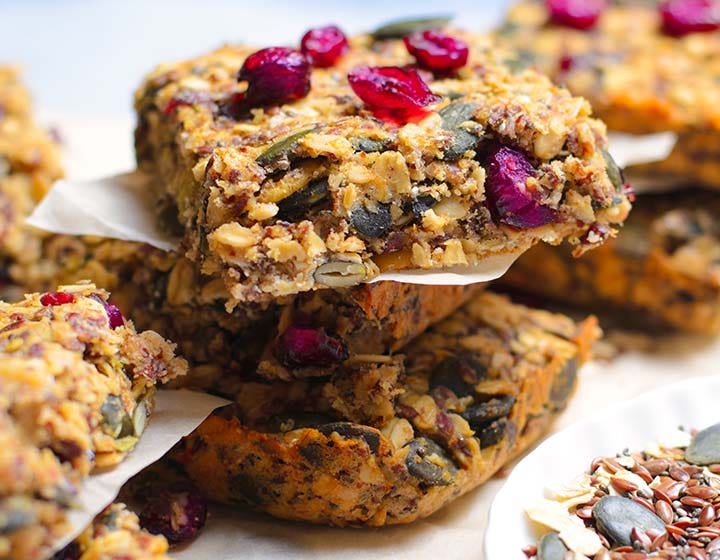
Insoluble fiber does not dissolve in water. Large, coarse insoluble fibers — such as wheat bran and cellulose — can physically stimulate the gut lining, helping promote regular bowel movements and support digestive health.¹
In contrast, finely milled insoluble fibers, including resistant starch types 2 and 4, may help reduce post‑meal blood glucose and insulin responses. Insoluble fibers are naturally present in wheat bran and other whole or partially milled grains. Resistant starch is found in whole grains, seeds, legumes, raw potatoes and green bananas, as well as in cooked‑then‑cooled starchy foods such as rice, potatoes and pasta.
Depending on their type and format, insoluble fibers may:
- Support bowel regularity through mechanical effects in the gastrointestinal tract
- Help moderate post‑meal blood glucose and insulin responses
- Enable fiber enrichment in baked goods, snacks, pasta and cereal‑based foods

Enrich your products with Ingredion’s proven fiber solutions
Create fiber-rich products that consumers will crave. We have what you need to bring your vision to life through a broad plant-based portfolio of in-demand ingredients and solutions for improved nutrition, health and wellness applications. Our formulation, sensory and nutrition science experts have the experience to help you design and get your fiber-enhanced products to market faster. Let our dedicated team be your guide for claims substantiation, label requirements and identifying a fiber solution that’s right for your product.
Fiber solutions by type
Soluble fiber ingredients
Nutraflora ® scFOS supports mineral absorption in adults and adolescents and supports bone health in post-menopausal women when taken with calcium. It is bifidogenic and supports digestive health or gut health.
Like Nutraflora ® scFOS, acacia fiber is also a prebiotic ingredient. In addition, it supports glycemic health by reducing after-meal blood glucose and insulin levels.

NUTRAFLORA® P-95
Enhance fiber, reduce sugar and support digestive health with this powdered soluble prebiotic fiber.
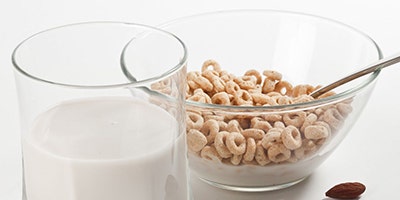
NUTRAFLORA® FB P-95
Enhance fiber, reduce sugar and support digestive health with a minimum of 95% (dry basis) scFOS.
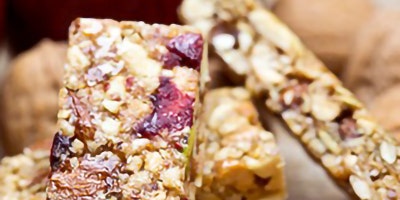
NUTRAFLORA® L-95 S
Enhance fiber, reduce sugar and support digestive health with a soluble prebiotic fiber syrup.


FORTIFEED® L-95
Selectively stimulate the growth and/or activity of beneficial microflora while being unavailable to pathogens.
Insoluble fibers*
Our insoluble fiber portfolio includes options suitable for low FODMAP and sensitive digestion formulations. These include low-FODMAP options that can help you differentiate your products with higher fiber content and bring digestive health benefits to baked goods, snacks, pasta and more. These ingredients help increase fiber content while preserving the taste and texture consumers expect in baked goods, snacks and grain-based foods.

HI-MAIZE® 260 resistant starch
Replace refined or whole wheat flour on a one-to-one basis in a wide range of recipes.

NOVELOSE® 3490 resistant starch*
Deliver just-right taste, texture and even fewer calories in fiber-rich foods.
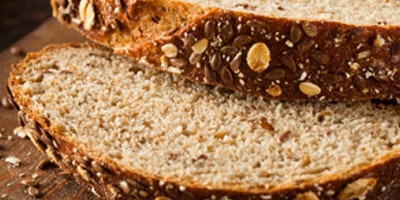
VERSAFIBE™ 1490 resistant starch*
Add low-FODMAP certified fiber, reduce calories and net carbohydrates.

VERSAFIBE 1485*
Increase dietary fiber and reduce calories with this potato-based modified food starch.

FIBERTEX™ CF citrus fibers
Formulate sustainable, cost-efficient products with a consumer-preferred clean labels.
Related resources
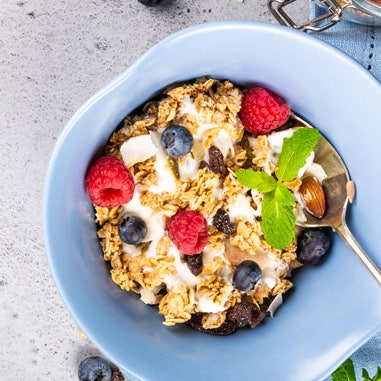
Digestive health
Create appeal and promote consumer well-being with solutions designed to maintain and improve digestive health.

Formulating for nutrition
Give consumers more of what they want and less of what they don’t. Our solutions for nutrition can replace less-desirable ingredients with more nutritious alternatives — adding fiber, enhancing protein or reducing sugar in your application.
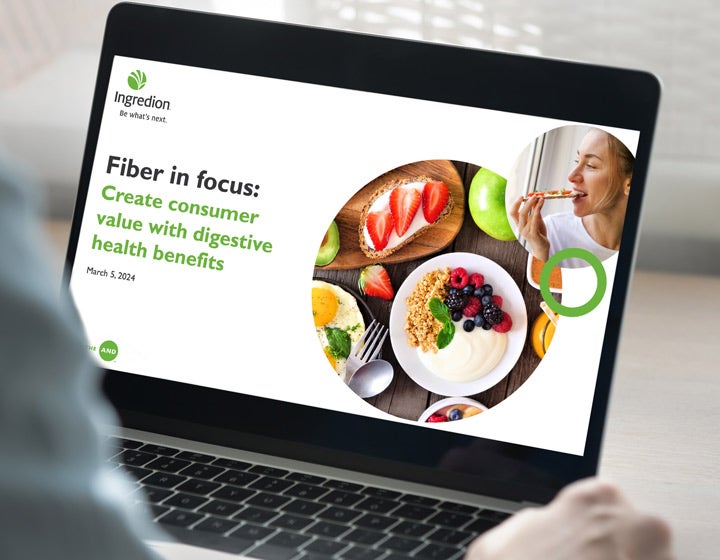
Webinar: Fiber in Focus
Drive brand loyalty and growth by (re)formulating fiber-enriched products that help consumers improve their digestive health.
View webinar
Webinar: Fiber's role in snacking
Explore consumer snacking trends and get nutrition, health and wellness formulation insights from Ingredion experts.
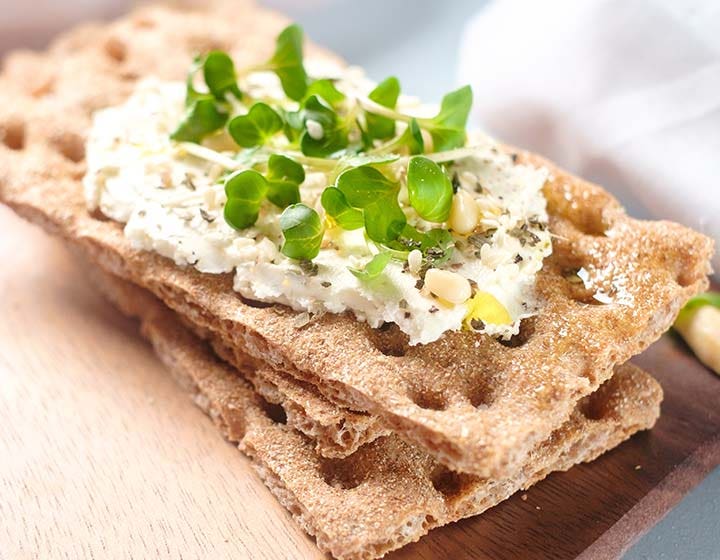
Texturizer solutions
Optimize formulations and consumer eating enjoyment with the right texturizer for your unique needs.
Frequently asked questions:
What is dietary fiber made of?
Dietary fiber is made up of carbohydrate polymers with three or more monomeric units (MUs), which are neither digested nor absorbed in the human intestine. Some non-carbohydrates such as lignin and substances which are present in cell walls linked to polysaccharides may also be considered dietary fibers according to different regulatory authorities.
Where does dietary fiber come from?
Dietary fibers may come from:
- Naturally occurring sources: “intrinsic and intact” carbohydrates and lignin
- Isolated or synthetic carbohydrates that have physiological effects that are beneficial to human health
What are the key health benefits of regular fiber consumption?
According to FDA-recognized evidence, fiber supports:
- Healthy digestion and bowel regularity
- Lower cholesterol and improved heart health
- Reduced blood glucose and insulin response
- Increased calcium absorption and bone health
- Enhanced satiety, supporting weight management
What are the top food and beverage categories for fiber fortification?
While bakery and cereals remain leading categories, emerging growth areas include snacks, chocolate, carbonated beverages, instant noodles and deli substitutes, reflecting consumer interest in fiber across unexpected categories.
Are Ingredion’s fiber ingredients clean label and plant-based?
Yes. Ingredion’s fiber portfolio is plant-based, non-GMO and label-friendly, meeting consumer demand for natural and minimally processed ingredients.
Are Ingredion’s fibers suitable for low-FODMAP or sensitive digestion?
Yes. Ingredion offers low-FODMAP-certified insoluble fibers suitable for consumers with digestive sensitivities, helping brands expand into gut-health-friendly markets.
How can I add fiber to my product without compromising taste or texture?
Ingredion’s technical experts help identify the right fiber type and inclusion level to enhance nutrition while preserving the sensory qualities consumers love. Proprietary sensory and formulation expertise ensures no grittiness, off-flavors or undesirable mouthfeel.
Can fiber enrichment support other health-focused claims?
Yes. Many of Ingredion’s fibers contribute to calorie reduction, blood sugar management and weight wellness positioning, supporting claims related to metabolic health and digestive wellness.
Is Ingredion’s fiber portfolio recognized by regulatory bodies?
Yes. Ingredion’s fiber ingredients meet FDA and EFSA definitions of dietary fiber and are supported by clinical and scientific evidence demonstrating beneficial physiological effects.
How can Ingredion help with formulation and labeling?
Ingredion’s team of nutrition scientists, regulatory experts and sensory specialists provides support for:
- Nutrient content and structure/function claim substantiation
- Label declaration and fiber classification
- Reformulation strategies for sugar and calorie reduction
What are the functional benefits of adding Ingredion’s dietary fiber solutions to your formulations?
Ingredion’s soluble and insoluble fibers not only increase fiber content but also help:
- Reduce sugar and calorie levels
- Improve texture, viscosity and mouthfeel
- Enhance stability in formulations
- Support prebiotic and gut health claims
- Align with sustainability and clean label goals

Learn more about texturizers
Whether you’re formulating for a specific characteristic or simply interested in learning more about an ingredient, our Texturizer Solutions page has all the information you need.
Let’s make your goals a reality
Collaborate with us today to tap into our deep nutrition and sensory science expertise, formulation experience, broad portfolio of in-demand ingredients, market research, consumer insights and more.
1Makki, Kassem, et al. "The impact of dietary fiber on gut microbiota in host health and disease." Cell Host & Microbe 23.6 (2018): 705-715.
*Meets FDA requirements for dietary fibers
The information described above is offered solely for your consideration, investigation and independent verification. It is up to you to decide whether and how to use this information. Ingredion Incorporated and the Ingredion group of companies make no warranty about the accuracy or completeness of the information contained above or the suitability of any of their products for your specific intended use. Furthermore, all express or implied warranties of noninfringement, merchantability or fitness for a particular purpose are hereby disclaimed. Ingredion Incorporated and the Ingredion group of companies assume no responsibility for any liability or damages arising out of or relating to the foregoing.