At a glance
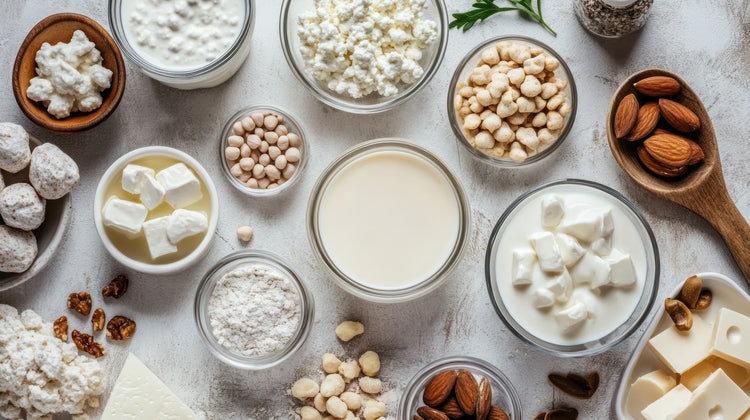
The dairy alternatives market is booming, driven by consumer demand for clean labels, affordability and dairy-like taste and texture.
Key insights:
- Market expansion: The plant-based dairy market grew from $7.62B in 2019 to $11.45B in 2023, with a 12% CAGR in the U.S. and Western Europe
- Consumer priorities: 80% of global consumers are concerned about food prices; 51% maintained or increased purchases of non-dairy yoghurt, cheese, milk and ice cream
- Texture and taste challenges: Ingredion’s PURITY® P 1002 pea starch and TICAGEL® CA 0979 M replicate melt, stretch and hardness in vegan mozzarella, enabling pizza-ready performance
- Yoghurt innovation: Simplistica™ YG 3206 delivers creamy texture and stability in coconut-based yogurt, closely matching dairy benchmarks in sensory evaluations
- Formulation advantage: Ingredion’s ingredient systems help brands reduce costs, improve texture and meet clean label and nutritional demands in plant-based dairy alternatives
The plant-based dairy market is fast expanding, but today’s consumers want more than just alternatives. They want products that are organic, all-natural and healthy — and yet still deliver the taste and texture of traditional dairy. How can brands deliver all that without slowing down innovation or driving up costs? Learn how we make it possible with innovative dairy alternatives and all-in-one formulations.
Understanding today's plant-based food and beverage consumer
Several factors are in play as consumers opt for plant-based food and beverage products, including alternative dairy.
The results of our proprietary ATLAS consumer insights survey and other research indicates that:
- Consumers are increasingly interested in products with organic or all-natural claims, and that offer them health benefits like immunity support and digestive health
- Price is still a decisive factor for many consumers
- Taste and texture remain critical for overall satisfaction
The growing demand for dairy alternatives
Our latest proprietary research shows, 51% of global consumers maintain their purchases of plant-based products such as non-dairy yogurt, cheese, milk and ice cream, while 26% are buying even more alternative dairy products than last year.1
In addition to price, consumers are increasingly motivated by brand, the ingredients list, claims, nutritional information and health benefits such as digestive health, reduced or no added sugar and reduced or zero fat.1 Today, consumers are regularly checking product details and choosing those that they believe provide the best value for their money.
Price remains top-of-mind for consumers
According to our consumer research, 80% of global consumers are concerned about food prices.2 In turn, low-income households, which are generally more sensitive to rising costs, have traded down on meat and dairy products as prices increased.3
How changing consumer demand shapes the dairy alternatives market
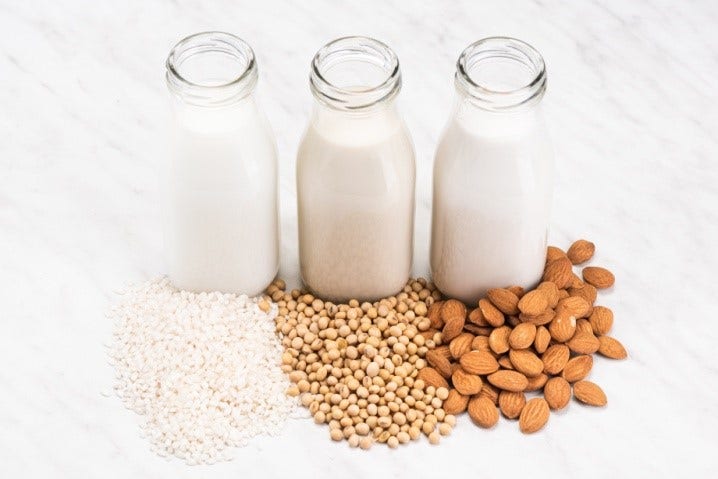
Evolving from niche to mainstream, the plant-based dairy market has demonstrated a 12% compound annual growth rate (CAGR) in the U.S. and Western Europe alone, growing from approximately $7.62 billion (USD) in 2019 to about USD $11.45 billion in 2023, as reported in the Roland Berger study.5
According to the same report, taste, texture and price remain the key barriers to purchasing more plant-based products. Aiming to increase adoption of dairy alternatives, we combine proprietary insights and comprehensive technical solutions into winning formulations to help you deliver the sensory experience expected by consumers while also reducing manufacturing costs.
Leading the way in dairy alternative innovation — here is how we do it
Powered by science-backed insights and our advanced ingredient portfolio, we offer solutions for alternative yoghurt and cheese production. These formulations are specifically designed to deliver dairy-like eating experiences while helping you address common manufacturing challenges, such as viscosity-related issues, undesirable flavours, stability or unwanted process interactions.
Cheese alternatives: Replicating melt, stretch & shredding
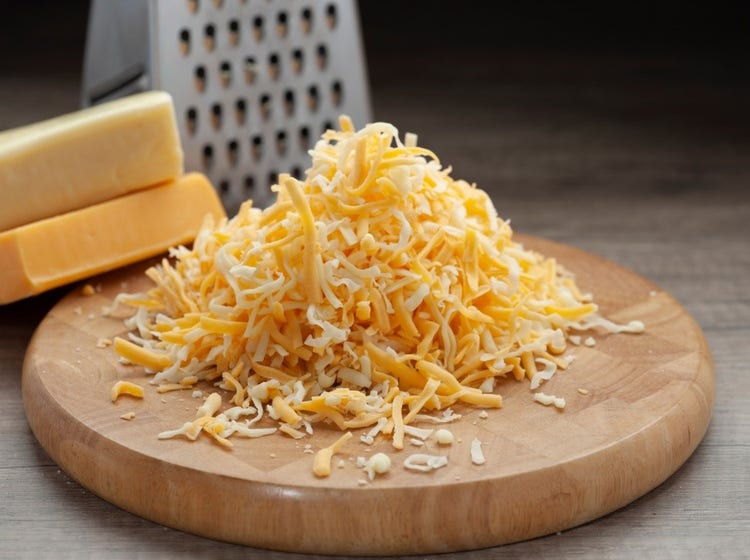
With demand for plant-based cheeses showing no sign of letting up, cheese producers are looking for ways to innovate with both new and existing products to better meet consumer expectations. Among those expectations, cheese's meltability, shreddability, colour and hardness have emerged as key characteristics shaping consumer choices.
For example, when replicating mozzarella-style vegan cheese, manufacturers must match the colour, melt and hardness of dairy cheese, which are key attributes for pizza applications. Our vegan cheese solutions help overcome common formulation challenges, enabling shreddable and meltable vegan mozzarella that delivers a familiar eating experience for consumers.
In pursuing a dairy-like eating experience, we go a step further with our innovative pea starch-based solutions. When used in processed cheese production, Ingredion's PURITY® P 1002 pea starch delivers a firmer texture for smoother slicing and grating with less residue. This minimizes cleaning downtime, enhances operational efficiency and reduces costs.
In shredded cheese applications, PURITY® Pea Starch RTE improves flowability, minimizes clumping and reduces residual powderiness. Designed to deliver the texture consumers expect, it also provides superior anti-caking performance, offering both functional advantages and significant cost-in-use benefits.
Replicating melt spread with vegan cheese ingredients
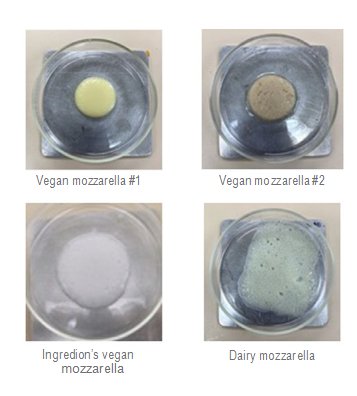
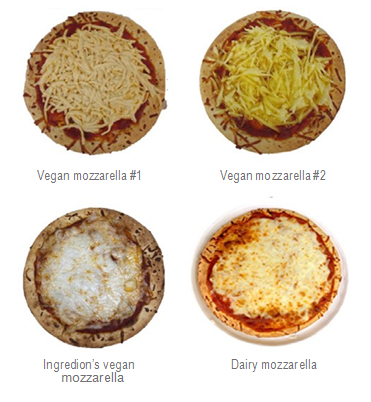
Sticking with our pizza example, the melt and spread characteristics of plant-based mozzarella are critical. However, many commercial vegan cheeses fall short — they barely spread when heated, making them unsuitable for pizza production, as shown in Figure 1 with two sampled plant-based varieties.
In contrast, dairy-based mozzarella melts and spreads evenly, allowing for easy coverage across the crust. Our vegan mozzarella, formulated with TICAGEL® CA 0979 M, closely replicates this behaviour, demonstrating melt and spread performance that’s largely comparable to traditional dairy cheese.
Replicating the hardness of dairy cheese with plant-based alternatives
Hardness is another essential cheese characteristic as it directly impacts shreddability.
In a hardness comparison between traditional dairy cheeses and plant-based samples, commercial vegan cheeses were either too hard or too soft and didn’t produce an acceptable shred. By contrast, dairy cheese and our plant-based mozzarella showed hardness within the range of 5 kg, which is for ideal shreddability.
Achieving complete melt and colour with vegan cheese ingredients
Achieving complete melt in dairy alternatives for mozzarella is another area where most vegan-based cheeses often fall short. Having a complete melt and comparable colour characteristics for plant-based mozzarella is essential to replicate the gooey, creamy texture and appearance of the dairy-based product.
In our study involving two randomly chosen samples, the commercial vegan-style cheeses didn't exhibit the melt characteristics and the white colour of the dairy product. Meanwhile, the plant-based sample using our vegan cheese ingredients showed comparable melt and colour in the melt fusion test.
Yoghurt alternatives: Fortifying nutrition and texture
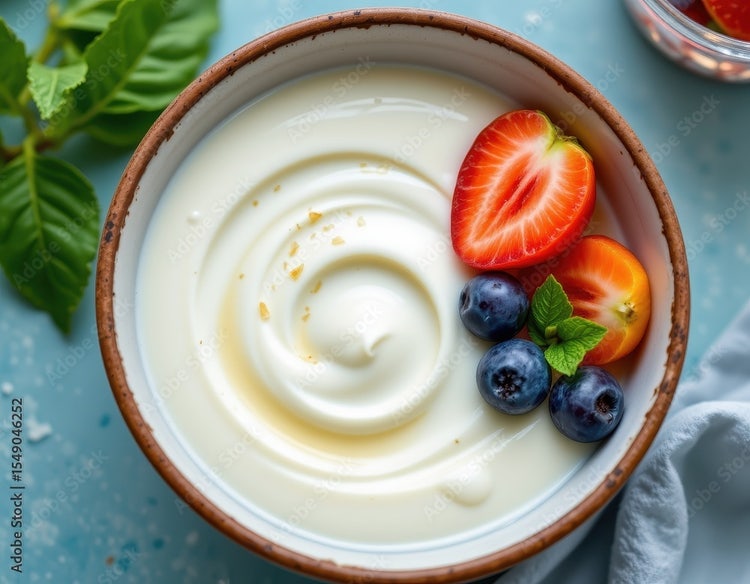
Dairy alternatives for yoghurt production create a number of challenges due to the lack of casein micelles, which are the source of protein and texture in dairy yogurt. Manufacturers using plant-based milk alternatives for yoghurt need to add a protein source and stabilisers to achieve the required texture and stability. On top of that, heating and homogenisation (HTST) processing requires special formulation for stabilisers to withstand the rigours of the production process.
Our Simplistica™ YG 3206 ingredient system addresses these issues and fortifies plant-based yogurts while providing a dairy-like eating experience. This formulation is designed to withstand the heat and pressure of the yoghurt production process and delivers a creamy texture, offering the closest match to dairy products.
Evaluation of Ingredion-developed yoghurt
In a test evaluation of Simplistica™ YG 3206, our team developed a coconut milk-based yoghurt according to the formula below:
Sensory and food science experts compared our yoghurt with a dairy sample and a commercial plant-based yoghurt alternative on a 15-point scale that included evenness of a mouth coat, cohesiveness, slipperiness and other parameters. While the commercial plant-based yoghurt alternative showed higher pulse notes (grassy or earthy flavour) and a higher level of mouth coating, our prototype with Simplistica™ YG 3206 offered the closest match to the dairy product.
Let’s create the future of dairy alternatives together
We help brands drive consumer preference in the alternative dairy market with insights into consumer preferences and comprehensive solutions that create value for our producer partners. Our innovative solutions for plant-based cheese and yogurt, frozen treats and more demonstrate the closest match to dairy products while helping manufacturers cater to new market trends.
Looking for more information or support in achieving optimal ingredient functionality and sensory experience when developing products using dairy alternatives? Contact our experts to begin your plant-based dairy innovation journey and create the taste, texture and overall experience your consumers will love.
Meet the expert
Related content and resources
Yoghurt and cultured products
Partner with Ingredion to elevate yoghurt with clean labels, less sugar and indulgent textures
Cheese
Access our broad range of plant-sourced texturising ingredients delivering superior properties for more authentic, more cost-efficient imitation cheese
Plant-based dairy alternatives
Achieve true dairy-like texture, taste and functionality that delivers the protein, calcium and other key nutrition aspects consumers seek
References:
1. Ingredion proprietary study, ATLAS Global Consumer Research, 2023
2. Ingredion report, Revolutionizing recipes with plant-based egg substitutes: The pea protein advantage, 2025
3. An update on US consumer sentiment: In response to tariffs, most consumers plan to adjust spending, McKinsey, 2025
4. Ingredion's proprietary texture consumer research study, 2024
5. Plant-based dairy: high-potential or hype? Roland Berger, 2025
*Product availability and costs may vary across global regions. Contact an Ingredion representative to learn more.