
At a glance
- Clean label continues to evolve. Thirty years after Ingredion introduced NOVATION® functional native starch at Fi Europe in 1996, cleaner-label formulation is increasingly connected to expectations around nutrition, texture, performance and value
- Formulation priorities are converging. Nutrition, value and performance increasingly need to work together rather than being addressed as isolated objectives
- Prototypes brought those trade-offs to life. Concepts spanning beverages, dairy, plant-based, savory and snacking demonstrated approaches to protein and fibre fortification, sugar reduction, clean label, texture and cost
- Protein innovation is moving beyond nutrition alone. A joint session from Ingredion and Lantmännen explored plant protein development through sensory and sustainability considerations
- Digital tools are becoming part of the innovation process. MyIngredion and Ask Ingredion demonstrated the role digital resources can play in supporting customer development
What were the key food innovation trends at Fi Europe 2026?
Food Ingredients Europe 2026 highlighted growing convergence between clean label ingredients, positive nutrition, food texture solutions, sugar reduction, protein and fibre fortification and affordability. Rather than addressing these needs independently, food and beverage manufacturers are increasingly looking for formulation strategies that balance nutrition, sensory experience, performance and value.
Food and beverage innovation rarely comes down to solving one challenge at a time.
Consumers may want more protein and fibre, less sugar, simpler labels and an enjoyable sensory experience, while manufacturers are simultaneously navigating cost and performance. Increasingly, the challenge is not choosing between those priorities. It is understanding how a change in one area affects the entire formulation.
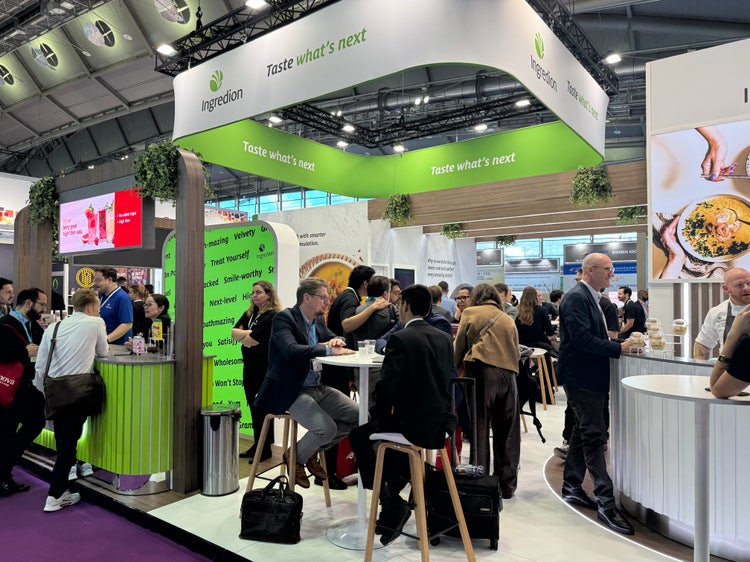
That intersection was at the heart of Ingredion’s presence at Fi Europe 2026, where prototypes, sensory experiences, technical discussions and digital tools showed how formulation can help reconcile health, value and performance.
Clean label at 30: A pursuit that continues to evolve
Fi Europe 2026 marked an important milestone for Ingredion: 30 years since NOVATION® functional native starch was introduced at Fi Europe in 1996.
But the clean label conversation has changed considerably over those three decades. Today, formulation decisions around clean label ingredients and clean label reformulation increasingly sit alongside expectations for nutrition, affordability, texture and performance. That makes clean label less of a standalone formulation goal and more like an individual part of a wider product-development equation.
The challenge for formulators is therefore increasingly interconnected: changing one component of a formulation can affect texture, stability, sweetness, processing or cost. Addressing those trade-offs requires looking at the whole product experience rather than one claim or ingredient at a time.
This interconnected approach was reflected across Ingredion’s presence at the show, where clean label sat alongside texture, positive nutrition and value-driven reformulation as interconnected formulation priorities.
Bringing formulation challenges to life
Ingredion translated these interconnected challenges into finished food and beverage concepts, illustrating how priorities such as protein and fibre fortification, sugar reduction, clean label, texture and cost can work together in practical applications.
Featured prototypes on the floor

Plant-based yoghurt with mango fruit preparation and low sugar granola
Combined protein, fibre and no-added-sugar fruit preparation while addressing the familiar plant-based challenge of maintaining creamy texture, clean taste and enjoyable crunch as the nutritional profile evolves.

Raspberry & rose high fibre soda
Showed how beverages can deliver high fibre and no added sugar while maintaining clean taste, good fibre dispersion and a refreshing experience.
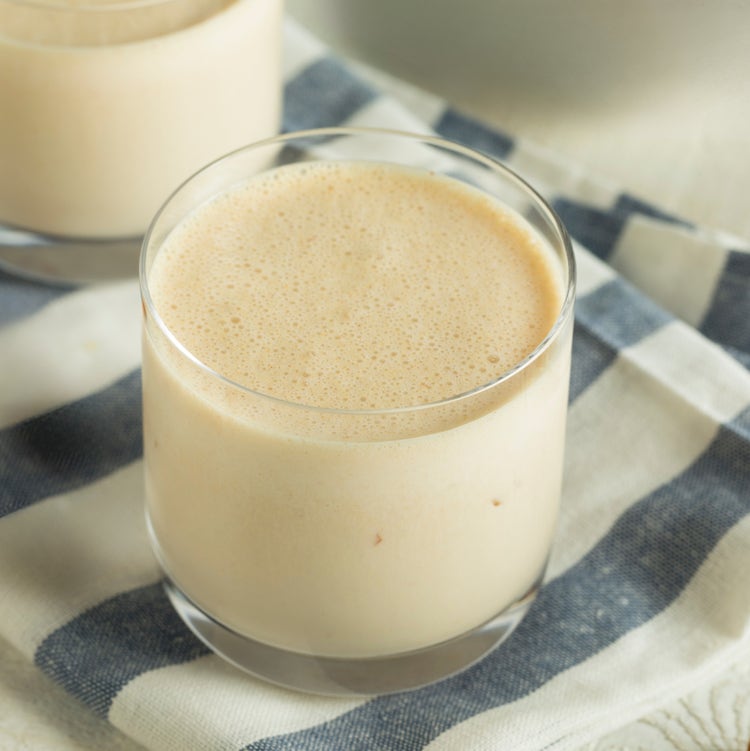
Lemon pie high-protein hybrid read-to-drink beverage
Paired high protein with low sugar while tackling a common challenge in protein beverages: creating a smooth, indulgent mouthfeel without chalkiness.

Matcha tea creamy dessert
Demonstrated how dairy desserts can move toward cleaner labels by replacing modified starch and carrageenan while maintaining product performance and an indulgent experience.

No-added-sugar strawberry sauce
Tackled sugar reduction without losing the sweetness, texture and fruit appeal consumers expect from dessert sauces.

Tortilla wrap with cream cheese
Brought protein, fibre and clean label together in a convenient snack while maintaining the taste and texture needed for an enjoyable eating experience.

Crispy coated Korean chicken with Korean BBQ sauce
Showed how formulators can simplify labels and reduce formulation costs while preserving crispy texture and product performance.
Together, the concepts made the broader formulation challenge tangible; improving one dimension of a product cannot come at the expense of another. Adding nutrition, reducing sugar, simplifying a label or managing cost can introduce new considerations around texture, taste and performance. The opportunity is to design for those priorities together rather than solve them one at a time.
Texture becomes something you can experience
That interconnected thinking extended beyond the main booth through an invitation-only Texture Experience designed to bring taste, food texture solutions and functionality to life in finished applications.
The showcase provided another way to explore an important formulation reality: consumers experience products as a whole. Texture, taste, appearance and functionality need to work together to create an experience people want to repeat.
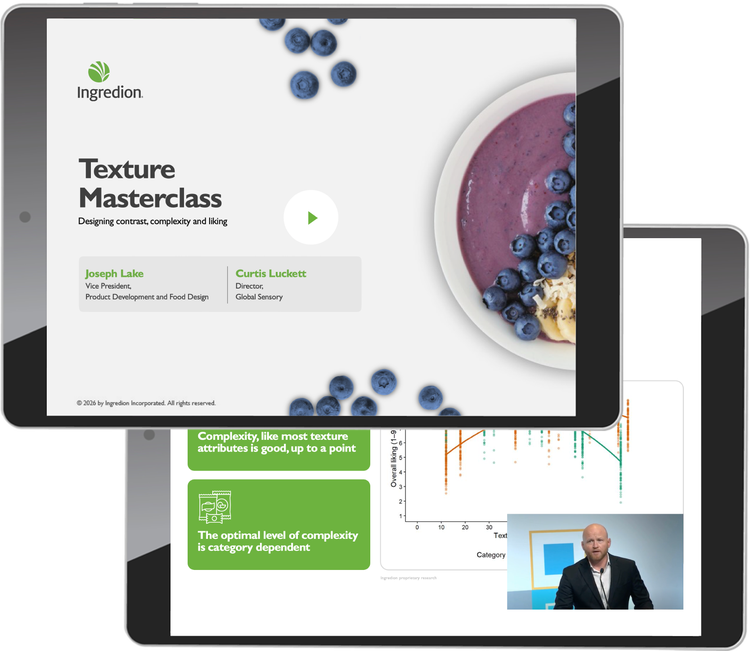
Webinar: Texture Masterclass – Designing contrast, complexity and liking
Texture can shape the eating experience in powerful ways, but creating the right experience takes thoughtful design. In this webinar, Ingredion experts explore how texture contrast and complexity can build interest and drive consumer preference.
Get a closer look at:
- How texture contrast creates interest throughout the eating experience
- Key principles for designing texture complexity
- How textural congruency brings contrasting textures together
- How thoughtful texture design comes to life in a real-world concept
Rethinking what successful plant protein innovation looks like
Protein remains an important area of innovation, but delivering more protein is only part of the development challenge.
At Fi Europe, Ingredion and Lantmännen brought that conversation to the stage with a session focused on developing plant protein products with strong sensory and sustainability foundations.
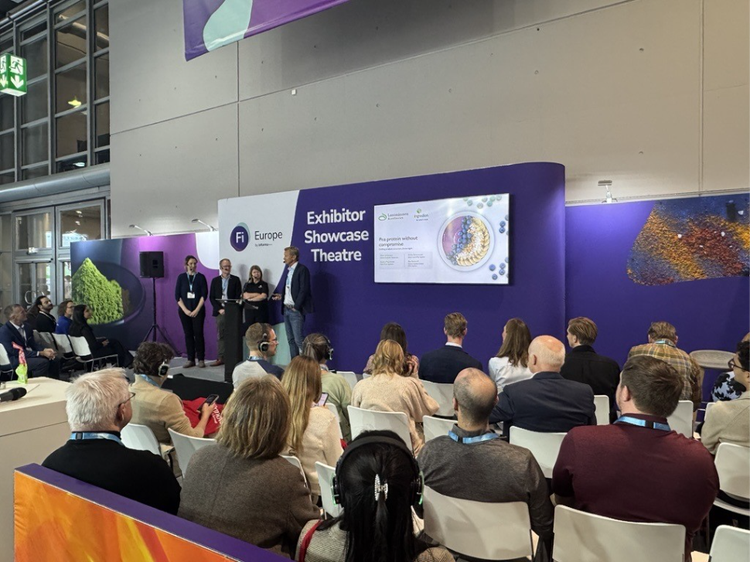
The discussion provides an opportunity to explore a broader consideration for protein innovation: nutritional targets still need to work within a product consumers want to eat or drink. Taste, texture, functionality and the wider formulation all remain part of that equation.
One key takeaway was the importance of considering sensory performance from the start, rather than addressing it at the end of development. By combining sensory-led development with greater understanding of the value chain, developers can identify where taste and texture are influenced and optimise where it matters most. At the same time, sustainability needs to be supported by credible evidence, from sourcing and cultivation through to resource efficiency and circularity.
Extending innovation beyond the show floor
The tools supporting product development are evolving too.
At Fi Europe, digital resources including MyIngredion and Ask Ingredion were part of Ingredion’s planned experience, illustrating how digital capabilities can complement technical and applications expertise as customers move through the development process.
The opportunity is not simply to add more technology to formulation. It is to help innovators more easily find relevant information, explore possibilities and make connections between challenges that may initially appear separate.

What we heard and saw at Fi Europe 2026
Health and wellness, reformulation and performance remained closely connected throughout the show, with growing attention on weight management, nutrient density and evolving plant-based solutions. At the same time, conversations around AI, new technologies and supply chain resilience reflected the wider pressures shaping how products are developed and reformulated.
Looking ahead: Innovation becomes an exercise in balance
If there is one idea to carry forward from Fi Europe 2026, it is that the next formulation challenge is rarely just one challenge.
Clean label can intersect with texture. Sugar reduction can reshape the broader sensory experience. Adding protein or fibre introduces its own formulation considerations. And all of those decisions take place within very real expectations around cost, processing and performance.
The opportunity ahead is to approach these priorities as parts of the same product system. For food and beverage innovators, that means looking beyond individual claims or ingredients and asking a broader question: How can a product deliver what consumers value while still working in the realities of formulation and manufacturing?
As those expectations continue to converge, the ability to balance health, value and performance may become one of the defining formulation skills of what comes next.
Related content
The trends seen at Fi Europe 2026 show that clean label, positive nutrition and texture increasingly need to work together. Explore the latest insights into nutrition-led formulation, clean label reformulation and texture innovation to help create products that balance consumer expectations with taste, performance and value.

Discover why texture is the missing link in positive nutrition
Consumers expect products to deliver multiple nutrition benefits without compromising taste, texture or eating enjoyment.

What clean label trends should food and beverage innovators be watching next?
Brands don't need to wait until they've "arrived" at clean label. They can move forward step by step, making informed choices about what should change, what should be protected and where tradeoffs create value.

Designing for impact: How texture complexity is reshaping food innovation
Texture is no longer a background attribute. It is a driver of satisfaction, differentiation and overall eating experience.
.